Lay Flat Pipe Solutions: Advanced Flexible Piping Systems for Industrial Applications

All Categories

Get a Free Quote

Our representative will contact you soon.
Email
Name
Whats App
Message
0/1000

lay flat pipe

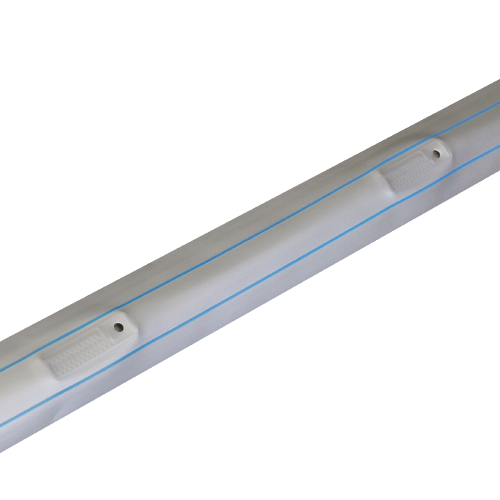
The lay flat pipe represents a revolutionary advancement in flexible piping solutions, designed to meet the diverse needs of modern industrial and commercial applications. This innovative piping system consists of a collapsible, flexible tube that can be flattened when not in use, making it an exceptionally space-efficient solution for fluid transport. The lay flat pipe construction typically features multiple layers of reinforced materials, including high-strength fabrics, synthetic rubber compounds, and specialized coatings that ensure durability and reliable performance under various operating conditions. The main functions of the lay flat pipe encompass fluid transfer, temporary piping installations, emergency water supply systems, and agricultural irrigation networks. Its technological features include superior flexibility that allows for easy installation around obstacles, resistance to kinking and crushing, and the ability to maintain structural integrity under high-pressure conditions. The lay flat pipe demonstrates exceptional adaptability to temperature variations, chemical exposure, and UV radiation, making it suitable for both indoor and outdoor applications. Manufacturing processes incorporate advanced polymer technologies and precision engineering to create a product that balances strength with flexibility. The lay flat pipe design incorporates reinforcement layers that prevent expansion under pressure while maintaining the ability to collapse completely when emptied. Applications span across multiple industries including construction sites for dewatering operations, mining facilities for slurry transport, agricultural sectors for crop irrigation, municipal water systems for emergency repairs, and marine environments for bilge pumping. The lay flat pipe technology has evolved to include specialized variants such as food-grade versions for beverage industries, chemical-resistant types for industrial processes, and high-temperature variants for specialized applications. Quality control measures ensure each lay flat pipe meets stringent performance standards for pressure ratings, temperature tolerance, and longevity, making it a reliable choice for critical applications where traditional rigid piping systems prove inadequate or impractical.

New Product Releases

The lay flat pipe offers numerous compelling advantages that make it superior to traditional piping solutions in many applications. Space efficiency stands as one of the most significant benefits, as the lay flat pipe can reduce storage requirements by up to 90 percent compared to rigid alternatives. When empty, the lay flat pipe collapses to a fraction of its operational diameter, allowing for compact storage and transportation that dramatically reduces logistics costs. Installation speed represents another major advantage, with the lay flat pipe requiring minimal tools and expertise for deployment. Workers can install hundreds of feet of lay flat pipe in minutes, whereas equivalent rigid systems demand extensive planning, cutting, fitting, and joining procedures that consume valuable time and labor resources. The lightweight nature of the lay flat pipe further enhances its practical benefits, as a single person can easily handle and position sections that would require multiple workers for rigid pipe installation. Flexibility emerges as a crucial advantage, enabling the lay flat pipe to navigate around obstacles, through tight spaces, and across uneven terrain without requiring additional fittings or complex routing solutions. This flexibility translates directly into cost savings by eliminating the need for specialized connectors, elbows, and junction pieces typically required with rigid systems. Maintenance requirements for the lay flat pipe remain minimal due to its simple construction and absence of permanent joints that can fail or leak over time. The lay flat pipe demonstrates excellent resistance to corrosion, scale buildup, and biological growth that commonly affect metal piping systems, resulting in longer service life and reduced maintenance interventions. Emergency deployment capabilities make the lay flat pipe invaluable for disaster response situations where rapid water supply restoration or flood management becomes critical. The lay flat pipe can be quickly deployed to establish temporary water lines, bypass damaged infrastructure, or create emergency drainage systems. Cost effectiveness extends beyond initial purchase price to include reduced shipping costs due to compact packaging, lower installation labor requirements, and decreased storage facility needs. Environmental benefits include reduced material usage compared to rigid alternatives and the ability to manufacture the lay flat pipe from recycled materials. Versatility allows the lay flat pipe to function effectively in applications ranging from high-pressure industrial processes to low-pressure agricultural irrigation, with specialized formulations available for specific chemical compatibilities or temperature requirements.

Latest News

Small Products Play a Crucial Role in Drip Irrigation Systems: Lock Ring Connectors for Drip Tape

15

Apr

Small Products Play a Crucial Role in Drip Irrigation Systems: Lock Ring Connectors for Drip Tape

View More
Flexible Lay Flat Hose: Ultimate Guide for Farm Water Management

16

Jun

Flexible Lay Flat Hose: Ultimate Guide for Farm Water Management

Explore the benefits of lay flat hoses for farm water management, focusing on efficient water distribution, durability, cost-effectiveness, technical specifications, and integration with drip irrigation systems. Enhance your agricultural productivity with lay flat hoses.
View More
How Does Agricultural Irrigation Improve Crop Yields?

29

Aug

How Does Agricultural Irrigation Improve Crop Yields?

View More
What Is Drip Irrigation and How Does It Work?

29

Aug

What Is Drip Irrigation and How Does It Work?

View More

Get a Free Quote

Our representative will contact you soon.
Email
Name
Company Name
Message
0/1000

lay flat pipe

Revolutionary Space-Saving Design Technology

Revolutionary Space-Saving Design Technology

The lay flat pipe incorporates groundbreaking space-saving technology that fundamentally transforms how piping systems are stored, transported, and deployed across various industries. This innovative design allows the lay flat pipe to collapse completely when not pressurized, reducing its storage footprint to less than ten percent of its operational volume. The engineering behind this remarkable capability involves precisely calculated wall thickness ratios, advanced polymer formulations, and strategic reinforcement placement that enables the lay flat pipe to flatten without compromising structural integrity or flow characteristics. Manufacturing processes utilize specialized calendering techniques to create uniform wall thickness that ensures consistent collapse patterns and prevents weak points that could lead to premature failure. The lay flat pipe design incorporates flexible reinforcement fibers that maintain their positioning during repeated expansion and collapse cycles, ensuring long-term reliability and performance consistency. Storage benefits extend far beyond simple space conservation, as the compact nature of the lay flat pipe enables organizations to maintain extensive piping inventories without requiring large warehouse facilities or specialized storage equipment. Transportation advantages multiply these benefits, allowing shipping companies to maximize cargo efficiency by transporting significantly more piping capacity in standard shipping containers. The lay flat pipe can be coiled onto compact reels or folded into space-efficient packages that fit into standard pickup trucks, eliminating the need for specialized transport vehicles required by rigid piping systems. Installation teams appreciate how the lay flat pipe can be pre-positioned throughout project sites without consuming valuable workspace or creating safety hazards associated with rigid pipe storage. Emergency response organizations particularly value the space-saving characteristics of the lay flat pipe, as it allows them to maintain extensive emergency piping supplies in limited storage spaces while ensuring rapid deployment capability when disasters strike. The environmental impact reduction achieved through space-efficient design translates into lower carbon footprints for transportation and reduced facility requirements for storage, aligning with sustainability initiatives across industries. Quality control measures ensure that the space-saving design never compromises performance, with rigorous testing protocols verifying that each lay flat pipe maintains its rated pressure capacity and flow characteristics regardless of how many collapse and expansion cycles it experiences.
Superior Installation Speed and Efficiency

Superior Installation Speed and Efficiency

The lay flat pipe delivers unmatched installation speed and operational efficiency that revolutionizes project timelines and labor requirements across diverse applications. Traditional piping installations typically require extensive preparation, including precise measurements, cutting operations, threading or welding procedures, and complex fitting assemblies that consume substantial time and specialized labor. In contrast, the lay flat pipe installation process eliminates these time-intensive steps, enabling crews to deploy complete piping systems in fractions of the time required for rigid alternatives. The installation efficiency stems from the lay flat pipe design that requires only simple connections at endpoints, with the flexible body capable of following any desired route without intermediate fittings or joints. Workers can rapidly unroll the lay flat pipe from compact storage reels, position it along the intended path, and establish operational flow within minutes of arrival at the installation site. This rapid deployment capability proves particularly valuable in emergency situations where immediate water supply restoration or temporary piping becomes critical for safety or operational continuity. Construction projects benefit enormously from the installation speed of the lay flat pipe, as temporary water lines, dewatering systems, and concrete pumping operations can be established quickly without disrupting other construction activities or requiring specialized equipment. The lay flat pipe installation process requires minimal tools, typically only standard wrenches for end connections, eliminating the need for cutting torches, threading machines, or specialized welding equipment that traditional installations demand. Labor cost reductions result from both decreased installation time and reduced skill requirements, as the lay flat pipe installation can be performed by general laborers rather than requiring certified pipe fitters or welders. Project scheduling becomes more flexible with the lay flat pipe, as installations can be completed rapidly when conditions permit, rather than requiring extended work periods that must be carefully coordinated with other project activities. Quality assurance during installation remains straightforward, with visual inspection sufficient to verify proper positioning and connection integrity, eliminating the need for complex testing procedures required with welded or threaded joint systems. The lay flat pipe installation efficiency extends to modification and relocation activities, as system reconfiguration requires only disconnecting end fittings and repositioning the flexible pipe body, rather than cutting, removing, and reinstalling rigid components with new fittings and joints.
Exceptional Durability and Chemical Resistance

Exceptional Durability and Chemical Resistance

The lay flat pipe exhibits exceptional durability and chemical resistance characteristics that ensure reliable long-term performance across demanding industrial environments and challenging operating conditions. Advanced polymer science drives the development of specialized compounds used in lay flat pipe construction, incorporating molecular structures specifically engineered to resist degradation from chemical exposure, temperature extremes, and mechanical stress. The multi-layer construction of the lay flat pipe creates a robust barrier system where each layer contributes specific protective properties, including chemical resistance, mechanical strength, and environmental protection. Inner layers utilize chemically inert materials that maintain their integrity when exposed to aggressive fluids, while outer layers provide protection against UV radiation, ozone exposure, and mechanical abrasion that can compromise lesser piping materials. Manufacturing quality control processes subject each lay flat pipe to rigorous chemical compatibility testing, ensuring that material selections align with intended applications and operating environments. The lay flat pipe demonstrates superior resistance to common industrial chemicals including acids, bases, solvents, and petroleum products that frequently damage conventional piping materials. Temperature stability represents another crucial aspect of lay flat pipe durability, with specialized formulations capable of maintaining flexibility and strength across wide temperature ranges that would cause rigid materials to become brittle or lose structural integrity. Pressure cycling resistance ensures that the lay flat pipe maintains its performance characteristics through thousands of pressurization and depressurization cycles without developing fatigue-related failures common in other flexible piping systems. Abrasion resistance protects the lay flat pipe surface during installation and operation, particularly important in applications where the pipe contacts rough surfaces or experiences relative movement during service. The lay flat pipe construction incorporates reinforcement materials strategically positioned to distribute stress loads and prevent localized failures that could compromise system integrity. Environmental resistance extends the service life of the lay flat pipe by protecting against degradation from exposure to sunlight, moisture, temperature variations, and atmospheric pollutants that accelerate aging in conventional materials. Field testing demonstrates that properly selected lay flat pipe systems can provide decades of reliable service in applications where other piping materials require frequent replacement or extensive maintenance interventions. Cost-effectiveness emerges from the combination of extended service life, minimal maintenance requirements, and resistance to the corrosion and scaling issues that plague metal piping systems, resulting in lower total ownership costs over the equipment lifecycle.

Get a Free Quote

Our representative will contact you soon.
Email
Name
Company Name
Message
0/1000